Dry Cleaning Reviews Playbook: Build Trust and Increase Bookings
Rick Bengson
Founder, CEO
February 11, 2026
Dry Cleaning Reviews Playbook: Build Trust and Increase Bookings
TL-DR For dry cleaners, your reputation determines whether that phone inquiry becomes a customer. Online reviews aren't just feedback—they're the trust signals that convince people to hand you their wedding dress, tailored suits, and cherished garments. Reviews drive local search rankings, customer decisions, and repeat business.
"In garment care, trust is evaluated before the first item crosses your counter. Reviews are how customers measure that trust."
You open the shop, a stack of shirts waiting on the press, and the phone rings: a potential new customer asks, “Do you have good reviews?” That one question can decide whether you get a first-time order or lose someone to the chain three blocks over. For dry cleaners, reputation often precedes service—people judge turnaround, stain-handling, and honesty before they step inside.
What follows are concrete steps you can use immediately: how to read and shape the reviews people see before they visit, how pricing and service choices show up in feedback, and practical messaging and timing to collect and respond to reviews without adding hours to your week.
The importance of reviews in the dry cleaning industry
Why customer trust matters
Trust affects three things that determine your weekly revenue: whether a caller becomes a customer, whether that customer returns, and whether they refer a neighbor. In dry cleaning, perceived reliability (on-time pickup/drop-off, button care, stain removal) is as important as price. A single complaint about a lost button or late order often weighs more in Google or Yelp searches than a positive mention of “good pressing.”
The role of online reputation
Online reviews act as a proxy for operational reliability. A customer choosing between two cleaners will look for evidence that your operation handles delicate fabrics and keeps deadlines. Reviews also create searchable language: words customers use in reviews become the phrases new customers search for when deciding who to call.
How can reviews impact my dry cleaning business?
How to choose the right dry cleaner and what reviews reveal
Key factors customers check
The impact of customer reviews on decisions
When you read reviews as a customer would, pay attention to patterns, not isolated praise. Look for phrases like “on time,” “fixed a stain,” or “charged extra without notice.” Those patterns tell you where your front desk script, pricing display, or bag-tagging needs to change. For customers, a clear description "two shirts cleaned, same-day pickup, button reattached" is a trusted signal.
Understanding pricing structures
Premium vs. discount dry cleaning
Price differences reflect more than pressing quality. Premium shops typically include hand-finishing, detailed stain treatment, and personal inspection before return. Discount shops may focus on volume and faster turnaround with fewer hand touches. Reviews will highlight whether customers felt the price matched the result; complaints about “shrinkage” or “missing buttons” almost always indicate process or training issues rather than pricing alone.
What you should make transparent
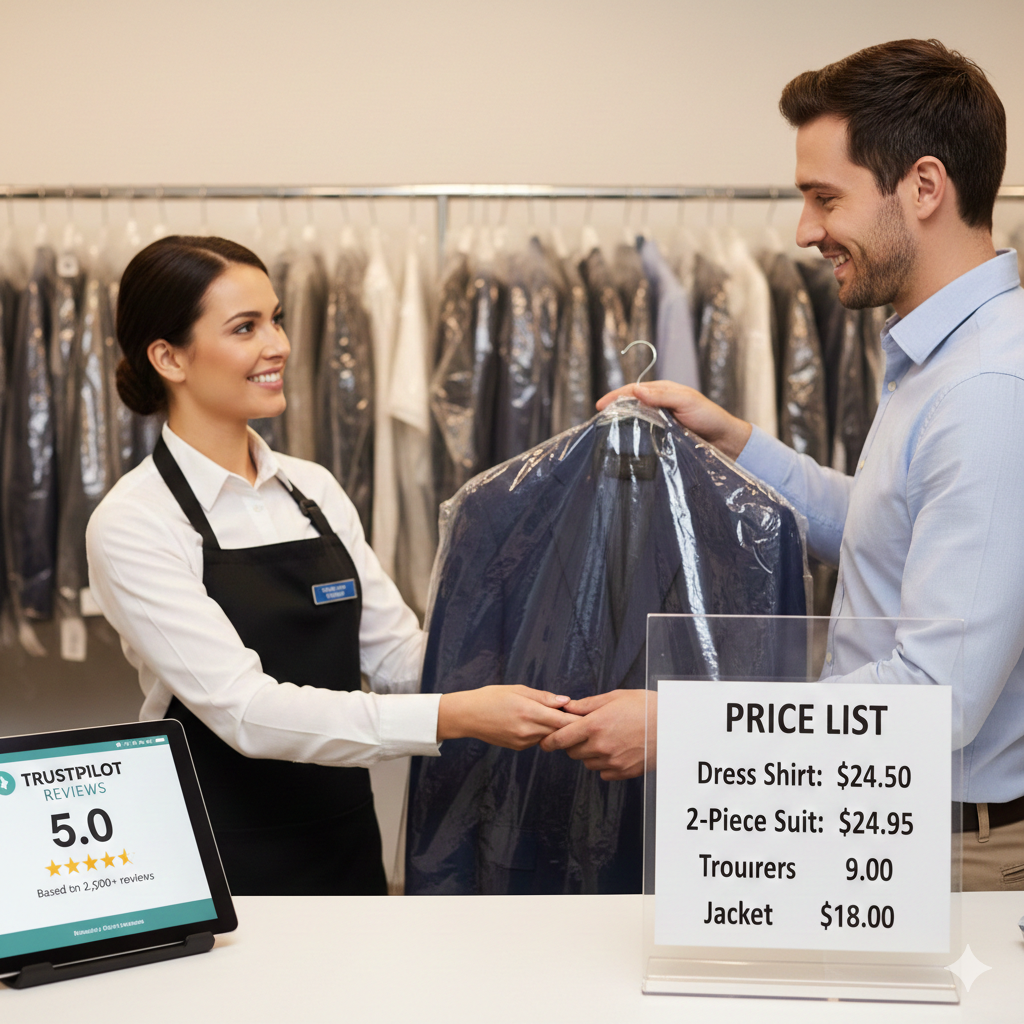
Put this information where customers look first: your Google Business profile, website, and a printed price list at the counter. Reviews will reference it clear pricing reduces misunderstandings that trigger negative reviews.
How to Collect Customer Feedback
Step 1: Timing and simplicity win. If you have staff handling counter interactions, set an automated follow-up so the team doesn't have to remember.
Practical choices used by busy shops:
Option 1: Automated SMS after pickup
Trigger: 30-90 minutes after customer picks up order
Message length: Under 160 characters
Include: Direct review link, option to report issues privately
Option 2: Email receipt with review prompt
Send with digital receipt immediately after payment
Include: "If satisfied, please review us" link + "If not, reply to make it right"
Format: Plain text (higher open rates than HTML for transactional emails)
For wedding dresses, large alterations, or first-time customers
Call 24 hours after pickup: "Did the preservation meet expectations?"
Convert positive feedback into review request
Step 2: Timing and simplicity win. If you have staff handling counter interactions, set an automated follow-up so the team doesn’t have to remember. Practical choices used by busy shops:
Sample SMS request: “Thanks for visiting CleanStreet Dry Cleaners. Did we meet your expectations today? Reply 1=Yes 2=No. Review link: [short link]”
Sample email/receipt blurb: “If we handled your garments well, please leave a quick review if not, reply to this email and we’ll make it right.” This gives unhappy customers a private path to resolution before public posting.
Real-World Example
A two-shop family cleaner noticed repeated mentions of "rushed finishing" in reviews. After switching to automated post-service requests and training one staff member to re-check garments before customer pickup, the number of follow-up complaints fell and the front-desk team spent less time resolving disputes.
"Rushed finishing" complaints dropped from 12% to 2% of reviews
Staff time spent on review management decreased from 3 hours/week to 20 minutes/week
Stop Losing Customers to Review Anxiety
ReviewCrusher automates review requests timed to pickup completion and generates AI-powered responses for your dry cleaning business across 30+ platforms—helping you earn more 5-star reviews while catching complaints privately before they go public.
Responding to negative reviews and turning them into opportunities
Don’t argue publicly. Use a three-part response: acknowledge, offer inspection/fix, and invite offline contact. Keep wording practical and specific.
Response template:
Tracking the nature of complaints reveals training or equipment issues—if multiple reviews mention “late orders,” look at your routing or staffing at peak times.
Using review management software in a real shop
Most busy owners face the same constraint: great service on the floor, no time for hands-on review collection. A lightweight system that automates requests, centralizes responses, and flags recurring issues keeps reviews from becoming a fire you put out only when it flares up. Some shops use ReviewCrusher to automate requests and view trends across multiple locations, so they can see if a late-turnaround problem is isolated to one branch.
What to look for in a review tool
For example, a two-shop family cleaner noticed repeated mentions of “rushed finishing” in reviews. After switching to automated post-service requests and training one staff member to re-check garments before customer pickup, the number of follow-up complaints fell and the front-desk team spent less time resolving disputes.
Conclusion: Put trust first before the customer walks in
In dry cleaning, trust is evaluated before the first garment is handed over. Reviews are the way customers measure that trust. Do the operational work—clear pricing, consistent inspection, and timely follow-up and use simple automation to collect and respond to feedback. Those steps turn reviews from a source of anxiety into an early-warning system that helps you fix process problems, keep repeat customers, and keep your phone ringing. In dry cleaning, trust is evaluated before the first garment is handed over. Reviews are the way customers measure that trust.
Do the operational work clear pricing, consistent inspection, and timely follow-up and use simple automation to collect and respond to feedback. Those steps turn reviews from a source of anxiety into an early-warning system that helps you fix process problems, keep repeat customers, and keep your phone ringing.
Your action plan:
This week: Check all platforms for unanswered reviews and respond
This month: Set up automated review requests after pickup
This quarter: Analyze complaint patterns and fix root causes
This year: Build to 100+ Google reviews with consistent automation
FAQ
1. How can I improve my dry cleaning business's online reputation?
Start by making service promises explicit: post clear pricing, turnaround times, and repair policies. Collect feedback automatically 30–90 minutes after pickup so happy customers can post while details are fresh. Respond to every review with a short, specific message—acknowledge the issue, offer inspection or rework, and record the complaint so you can fix the process that caused it.
What are the best practices for collecting customer reviews?
Keep requests brief and timely. Use SMS for immediate, one-question replies and email for longer feedback. Automate sending 30–90 minutes after service, include a short review link, and provide a private contact for concerns. Train staff to ask for reviews at pickup—this personal prompt plus an automated follow-up increases response rates without extra shift work.
How do customer reviews influence the choice of a dry cleaner?
Customers look for evidence of reliability before calling: on-time returns, successful stain removal, and honest pricing. Reviews translate those operational traits into searchable language. A handful of consistent comments good at stain removal, careful with buttons, same-day service will sway undecided customers more than a single five-star rating.
What is the difference between premium and discount dry cleaning services?
Premium services typically include hand-finishing, detailed stain treatment, and inspection prior to return; they often charge for specialized fabric care. Discount services trade some of that hand labor for speed and volume. Reviews will reflect whether customers felt the service matched the price—complaints often point to missing steps (uninspected garments, skipped repairs) rather than the price itself.
How can ReviewCrusher.ai help my dry cleaning business?
ReviewCrusher.ai can automate post-service review requests on a schedule you set, centralize incoming reviews from multiple platforms, and surface recurring issues so you can correct training or process gaps. It helps reduce the manual burden of requesting feedback and makes it easier to respond consistently to negative comments, which prevents small issues from escalating in public reviews.
Protect Your Reputation
Stop juggling reviews across different platforms. Centralize everything with ReviewCrusher’s review management software and start getting more reviews in less time.