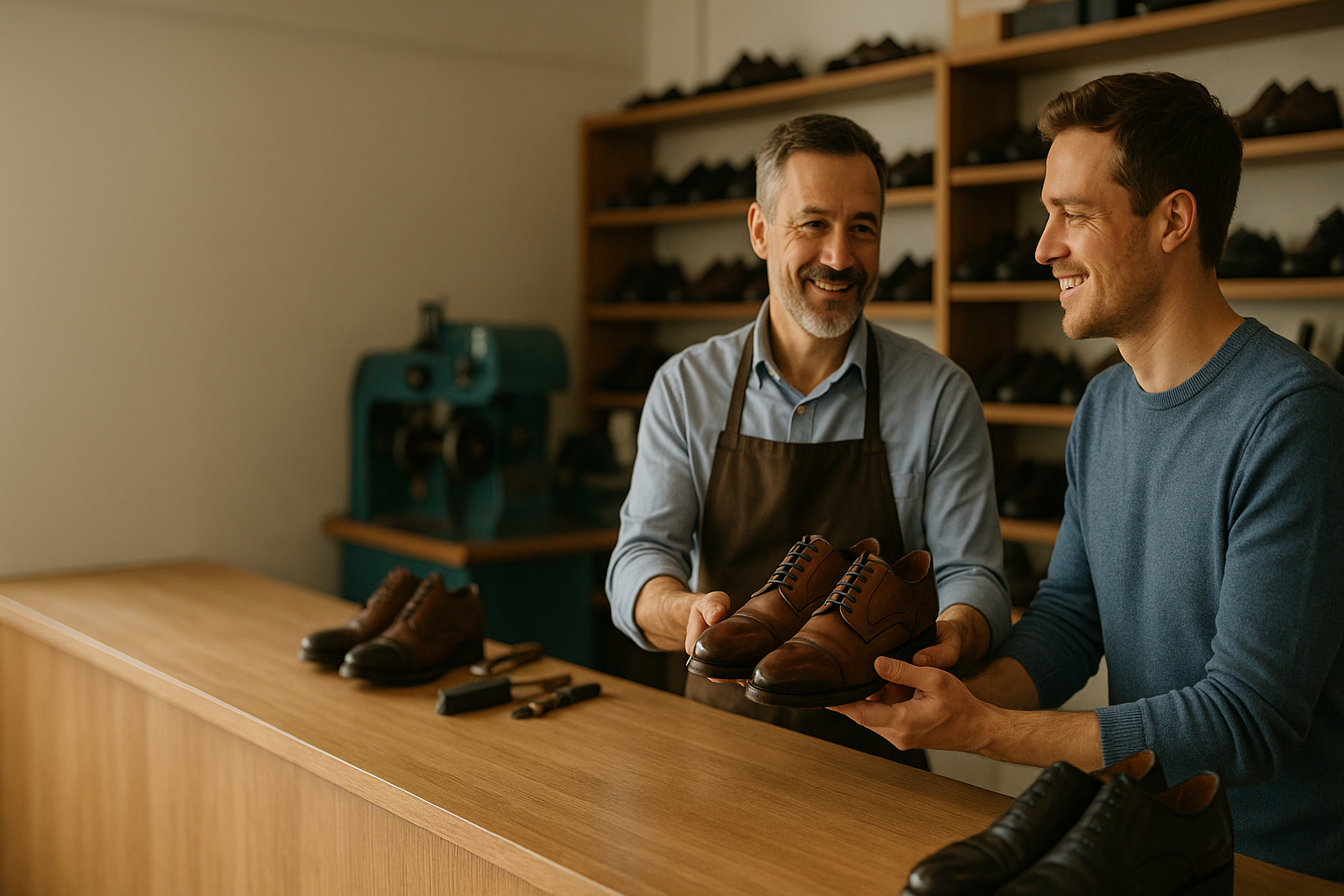
Affordable Shoe Repair Services and Reputation Management for Cobblers
TL-DR For shoe repair shops, reputation directly impacts foot traffic and trust. Customers choose cobblers based on reviews showing workmanship quality, honest pricing, and how shops handle mistakes. This guide shows repair shop owners how to balance affordable services with quality outcomes, while managing reviews to build sustainable business growth.
"In shoe repair, trust is everything. Your reviews tell customers whether you'll treat their cherished footwear with the care it deserves."
You open at 8:30, a steady drip of mending orders on the bench, and then a message: "My boots were ruined after your repair—refund now."
That single message can do more than unsettle your day; it can reduce calls, slow walk-ins, and sour the trust built with regulars. For many cobblers, the real cost of one unhappy customer is not the refund but the negative review that follows and the people who never walk through your door as a result.
This guide takes a practical point of view: Reputation outcomes in shoe repair come from predictable, addressable moments—how you handle the job, how and when you ask for feedback, and how you respond when things go wrong.
Read on to learn:
Operational fixes that prevent negative reviews before they happen
Messaging scripts for review requests that feel natural, not pushy
Ways to find affordable quality repairs while protecting the goodwill your shop depends on
Review management strategies specific to shoe repair businesses
Affordable Shoe Repair Services for All Footwear Types
Understanding the importance of shoe repair
Shoe repair isn't just a transaction; it preserves physical objects that often have sentimental or financial value. A well-executed resoling, heel replacement, or leather restitch can extend a pair by years. Practically, that means offering clear service tiers (basic, reinforced, premium) so customers know what to expect and why prices differ. On the bench, keep a simple defects log: date, customer name, issue, work performed. It helps when a customer returns upset the record shows what was agreed and what was done.
Why choose local shoe repair shops?
Local shops win on trust and speed. People bring shoes in because they want hands-on assessment and the ability to explain a story—"these were my wedding shoes." Emphasize pickup times that fit local routines (same-day quick fixes, 2–5 day resoles), and offer honest timelines at drop-off. Promoting community ties—repair trade-ins with a dry cleaner or a shoemaker co-op—also builds repeat traffic and word-of-mouth, which is vital when online reviews swing decisions.
The Role of Reviews in Shoe Repair Businesses
How reviews impact customer trust
Shoppers use reviews to judge workmanship, timeliness, and honesty about cost. A pattern of short replies or unanswered complaints signals neglect even if most jobs are good. Operationally, track two things weekly: number of new reviews and response rate to negative feedback. If you receive a negative review, publish a short public response acknowledging the issue and invite offline resolution customers notice that you care and other readers see accountability.
The emotional connection to footwear
Shoes carry memory—first jobs, weddings, long hikes. When a customer sees their repaired shoes, they're not evaluating glue lines alone; they're reconnecting with that memory.
Use that in your communication:
Photograph special repairs (with permission) for your portfolio
Keep before-and-after notes for delicate jobs
Mention specific techniques in conversation: "I used a blind stitch here to preserve the original look"
Share brief stories: "These Redwings have been resoled 4 times built to last"
Mentioning that you used a particular stitch or leather treatment reassures customers you treated their item with care and that care shows up in reviews.
Examples of emotionally resonant review language:
"He remembered my shoes from last year and the story I told him"
"Treated my grandmother's boots like they were museum pieces"
"Explained every step of the repair and why it mattered"
"You can tell he cares about the craft, not just the transaction"
Automate Review Requests Without Losing the Personal Touch
ReviewCrusher sends timed review requests after shoe pickup and routes negative feedback privately to your phone—helping you earn more 5-star reviews while catching quality issues before they become public complaints. Built for local service businesses like shoe repair shops.
For small cobblers, reputation drives foot traffic and referrals. A few negative reviews can reduce new calls, especially for high-value repairs.
Reputation matters because repair decisions are trust decisions customers prefer a shop that shows responsibility for its work over one that promises low prices and disappears after payment.
The reputation impact breakdown:
5-star average (50+ reviews): Receives 2-3x more calls than competitors
4.5-star average: Competitive, customers still choose you regularly
4.0-star average: Acceptable but vulnerable to better-reviewed competitors
Below 4.0 stars: Severe trust deficit, requires active recovery strategy
What one negative review costs:
Average customer lifetime value for cobbler: $400-$800 (10-15 repairs over years)
One negative review visible to 100+ potential customers = 5-10 lost conversions
Lost revenue per unaddressed negative review: $2,000-$8,000 annually
Practical review-management steps you can take
Step 1: Set up daily review monitoring (10 minutes)
Check Google Business Profile, Yelp, Facebook every morning
Set up Google Alerts for your business name + "review"
Flag negative reviews for immediate attention
Respond to all reviews (even 5-star "thank you" notes)
Step 2: Time your review requests strategically
Send request 30-90 minutes after pickup (while experience is fresh)
For restoration projects, wait 1 week (customer has worn shoes, knows quality)
Never ask during drop-off (customer hasn't experienced the service yet)
Follow up gently after 72 hours if no response
Step 3: Make review requests personal and specific
Reference the actual repair: "How did the heel replacement work out?"
Include staff name if they built rapport: "Joe wanted to make sure the boots fit well"
Provide both review link AND private feedback option
Keep it short (under 160 characters for SMS)
Step 4: Respond to negative reviews within 24 hours
Acknowledge the specific issue without getting defensive
Offer concrete remedy: "Please bring the boots back for inspection"
Provide direct contact: phone number, not just email
Move conversation offline quickly
Sample messages:
If your team is busy during peak hours, automate these messages so they still go out promptly; rely less on memory and more on timing to capture positive feedback.
How a review tool can help without being pushy
When handled well, automated requests increase responses without annoying customers. Tools that schedule a message 30–90 minutes post-pickup and send a gentle reminder in 72 hours reduce reliance on staff to remember and let you focus on repairs. A tool can also centralize review responses so you spot negative trends early and reply consistently.
When handled well, automated requests increase responses without annoying customers.
Tools that schedule a message 30–90 minutes post-pickup and send a gentle reminder in 72 hours reduce reliance on staff to remember and let you focus on repairs.
A tool can also:
Centralize review responses across Google, Yelp, Facebook
Spot negative trends early (multiple "heel fell off" reviews → quality control issue)
Reply consistently with your brand voice
Route negative feedback privately before it becomes public
Track which staff members get mentioned positively in reviews
ReviewCrusher specific features for shoe repair:
Integrates with simple POS systems (Square, Clover) to trigger requests at pickup
Sends both review link AND private feedback option in same message
Provides response templates for common shoe repair scenarios
Evaluating Quality vs. Cost
When deciding between price and quality, customers and owners should consider intended use.
For daily work boots:
Prioritize sturdier soles (Vibram, rubber compound)
Reinforced stitching at stress points
Water-resistant treatments
Focus: durability over appearance
For dress shoes:
Focus on appearance and proper finishing
Leather sole options for formal wear
Color matching for seamless repair
Hand-finishing details
Focus: aesthetics and comfort
For athletic/specialty shoes:
Manufacturer-specific materials when possible
Maintain original performance characteristics
Consider replacement vs. repair economics
Focus: functionality restoration
Affordable Shoe Repair Options
Finding budget-friendly services
Affordable doesn't mean cheap workmanship. Look for shops that offer transparent pricing by service, use mid-grade materials for everyday shoes, and reserve premium materials for heirloom items. Ask about warranties—shops that stand behind their work may charge slightly more but save customers from repeat costs.
Evaluating quality vs. cost
When deciding between price and quality, customers and owners should consider intended use. For daily work boots, prioritize sturdier soles and reinforced stitching. For dress shoes, focus on appearance and proper finishing. A realistic shop policy is to offer three tiers (economy, standard, restoration) and explain tradeoffs plainly at drop-off. That transparency reduces disputes and negative reviews.
Real-life testimonials and how to use them
Collect short testimonials at pickup ask one question: "Did this repair meet your expectations?" If yes, ask if you can post their first name and city. Short, specific comments work best: "Saved my work boots tightened the arch and they last longer." Use these on a shopboard and in your online profiles; potential customers read them as practical proof, not marketing copy.
Conclusion: Take action to preserve footwear and reputation
Your shop's reputation is built on predictable actions: clear service tiers, timely communication, honest timelines, and consistent follow-up. Small operational shifts—logging jobs, timing review requests 30–90 minutes after pickup, and using short, personal messages—stop many complaints before they become public. When a complaint does become a review, respond quickly and offer an offline fix. These moves protect trust, sustain foot traffic, and let you keep serving customers who value both their shoes and the hands that mend them.
FAQ
1. What should I look for in a shoe repair service?
Look for clear service tiers, visible examples of past work, and a written estimate. Check turnaround times and warranty terms for repairs. At drop-off, note whether the cobbler asks about intended use—daily wear, formal, or heavy-duty—because that affects materials and techniques used. This practical information reduces misunderstandings and future complaints.
How can I find affordable shoe repair options near me?
Search local listings for shops with recent reviews mentioning price and durability. Call and request a simple price for a common repair like a heel replacement and ask about turnaround. Choose shops that offer mid-grade materials for everyday shoes and reserve premium materials for heirloom pieces; this balance often provides the best value.
Why are customer reviews important for shoe repair businesses?
Reviews signal workmanship, timeliness, and whether a shop stands behind its work. Customers deciding where to leave a pair to be repaired rely on others’ experiences with similar repairs. For owners, reviews act as early warning—patterns of complaints reveal recurring issues like rushed work or poor adhesives that you can fix operationally.
How can ReviewCrusher.ai help my shoe repair shop?
A review management tool can schedule polite, timed requests (for example, immediately after pickup and a reminder a few days later), centralize responses, and flag negative feedback. That lets you maintain consistent follow-up without adding tasks to a busy bench, so more satisfied customers leave public reviews and problems get resolved faster.
What are the best practices for managing online reviews?
Ask for feedback promptly with short personal messages, respond publicly to negative reviews offering offline resolution, and collect short testimonials at pickup with permission. Train staff to repeat job details at drop-off and log repairs to reduce disputes. Automate follow-ups when staff are busy but keep replies human and specific.
Protect Your Reputation
Stop juggling reviews across different platforms. Centralize everything with ReviewCrusher’s review management software and start getting more reviews in less time.