Introduction: the moment that makes or breaks a referral
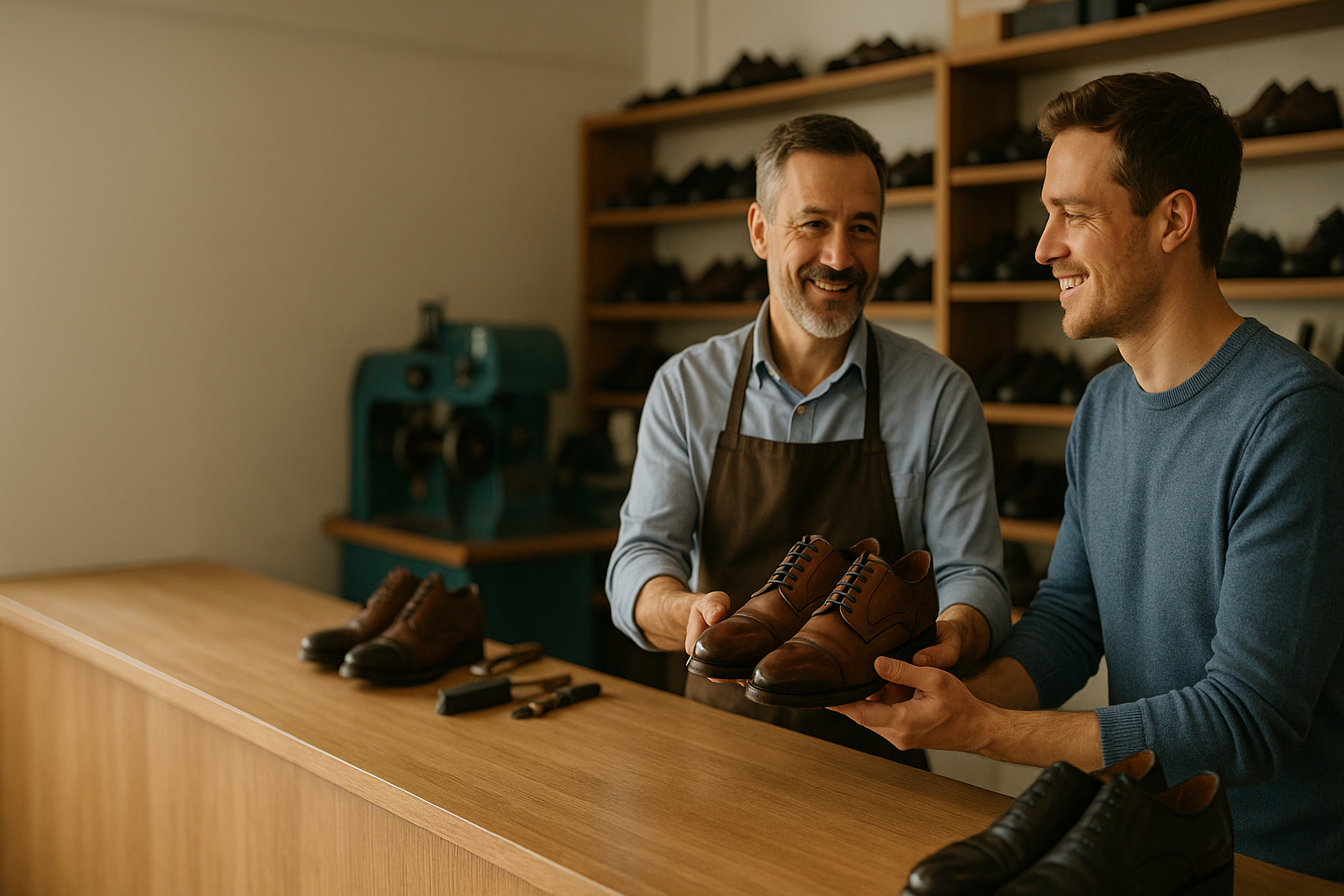
You know the scene: a customer drops off a pair of beloved leather oxfords, signs the receipt, asks whether the sole will last a year, and leaves with a promise to return. Two days later a neighbor asks for a cobbler recommendation and your shop is nowhere to be found online — or worse, there’s a single lukewarm review about a missed deadline. For shoe repair shops, reputation translates directly into calls, repeat business, and foot traffic. This guide shows concrete ways to manage customer reviews so your workmanship and trustworthiness show up where local customers look.
The importance of shoe repair services
Why quality matters — beyond the repair
Quality in shoe repair isn’t just technical skill: it’s reliability, honesty about price and timing, and clear communication. When you deliver consistent repairs and meet promised pick-up windows, customers tell neighbors and return with other shoes. That real-world reliability is what reviews capture — and what you must protect. A steady stream of accurate, recent reviews reassures someone scanning for “shoe repair near me” that you’ll handle their favorite pair with care.
The emotional connection to footwear
Customers don’t buy a resoling; they buy the return of a comfortable shoe, a memory, or a work tool that lets them get through the day. Reviews that mention a sentimental value (“saved my wedding shoes”) or a practical detail (“fixed work boots fast”) carry outsized weight. Encourage customers to mention what the repair meant to them — those phrases help future customers decide.
Understanding customer reviews
The role of reviews in the shoe repair industry
Customer reviews do two jobs: they answer practical questions (time, price, outcome) and they signal trust. For a local service, a string of recent, consistent reviews influences whether someone drops a question via phone or walks in. Treat reviews as an extension of your front counter: accurate, timely, and representative of the customer experience you deliver.
How reviews affect customer trust
When reviewers include specifics — materials used, time to repair, staff interaction — those details reduce perceived risk for future customers. A one-line “good job” is useful, but a short description like “repaired my leather sole in two days and fixed the stitching” converts better. Encourage specificity with simple prompts and a sample question on your receipt or follow-up message.
Leveraging community insights
Building a local reputation
Local reputation grows through repeated small interactions. Practical steps you can take today:
- Ask for a review at pickup: train staff to say, “If you’re happy with this, would you mind leaving a quick note about the turnaround time?”
- Use a printed card with a QR code linking to your main review page; hand it with the receipt.
- Track where referrals come from (word of mouth, walk-ins, a particular Facebook group) and thank those sources publicly when appropriate.
Those tactics help convert satisfied customers into public recommendations that prospective customers see.
Engaging with customers on social media
Show before-and-after photos and short repair stories on local community pages or your business profile. Encourage customers to tag the shop when they pick up — a photo of repaired shoes on a sidewalk or at a wedding tells a stronger story than a rating alone. When someone comments, reply with a short, personal note: “Thanks, Maria — glad the heels held up for the rehearsal!”
Review management strategies that work for busy shops
Automated review requests — timing and trade-offs
Timing is specific: aim to send the first review request 30–90 minutes after pick-up for same-day customers, or the same evening for longer repairs. If a customer paid by card in-store, trigger an SMS or email the same day while the receipt is still visible. For repairs that require shipping or longer timelines, send the request the day the shoes return to the customer.
If staff are slammed during peak hours, automation is preferable to relying on memory. An automated system can send the initial request, then one polite reminder three days later if no response appears. That lets your team focus on repairs while keeping review acquisition consistent.
Sample messages you can use
- SMS after pick-up: “Thanks for visiting Green Street Shoe Repairs. If your shoes met expectations, a quick review about the timing and fit helps local customers — it only takes a minute: [link]”
- Email follow-up: “We’re glad your boots are back in action. If you have a moment, please tell others what we fixed and how long it took — it helps neighbors find reliable repairs.”
Responding to reviews effectively
Responses should do three things: acknowledge, fix (if needed), and invite continued business. Examples:
- Positive review reply: “Thank you, John — glad the resole held up. Bring those back for a free inspection in six months.”
- Negative review reply: “I’m sorry we missed the deadline. Please call me at [number] or bring the shoes back; I’ll inspect them personally and make it right.”
Always offer to take the conversation offline for dispute resolution; that shows prospective customers you prioritize fixes over arguments.
How ReviewCrusher.ai can help in daily operations
For shops that want to automate the steps above without adding tasks for counter staff, review-management tools can schedule timed requests, store message templates, and flag negative feedback for quick replies. One such system can run the follow-ups you set, gather community feedback in one dashboard, and export recent review text to use in social posts or the shop’s page. Use technology to ensure prompts and replies match your voice and shop constraints.
Conclusion: what to prioritize this week
Start with two concrete moves: 1) put a QR review card in every customer’s bag and train staff to ask for a quick note about timing; 2) set one automated review request to send inside 90 minutes of pickup, with a single three-day reminder. Those actions capture high-conversion feedback and reduce the chance that a single negative incident defines your online reputation. With steady inputs and genuine replies, your craftsmanship will show up where local customers search.
FAQ
-
How can I improve my shoe repair shop's online reviews?
Focus on moments: ask at pickup, provide a printed QR card, and send a timely follow-up message 30–90 minutes after pickup. Train staff to request a specific detail (turnaround, fit, communication) so reviews are useful. If you can’t rely on counter staff, automate the follow-up and keep one reminder. Consistency and specific prompts increase both volume and quality of reviews.
-
What are the best practices for responding to negative reviews?
Respond quickly, acknowledge the issue, and offer a solution offline. Use wording like: “I’m sorry we missed your expectation. Please call me at [number] or bring the shoes in so I can personally inspect and correct this.” Avoid defensive language, document the repair history, and follow up publicly when the issue is resolved to show future customers you handle problems responsibly.
-
How does review management impact customer trust in shoe repair services?
Review management makes your shop’s reliability visible. Regular, specific reviews reduce perceived risk by answering common questions about timing, price, and outcomes. Thoughtful public responses to both praise and criticism demonstrate accountability. That visible pattern of service and resolution converts hesitant callers into appointments and loyal repeat customers.
-
Can automated review requests really increase customer feedback?
Yes. Automating a 30–90 minute request after pickup and a single reminder after three days captures customers while the experience is fresh. Systems such as ReviewCrusher can schedule these messages, use your templates, and flag low ratings so you can respond promptly. Automation is especially useful during busy periods when staff can’t remember to ask at the counter.
-
What role does community engagement play in building a shoe repair shop's reputation?
Community engagement amplifies word-of-mouth. Share before/after photos, collaborate with local stores for cross-posts, and participate in neighborhood groups. Encourage customers to tag your shop when their repaired shoes are worn out in public events. Local recommendations and visible repair stories make online ratings feel personal and trustworthy to nearby customers.