Turn Customer Reviews Into Revenue Growth: The Complete System for Local Businesses
Rick Bengson
Founder, CEO
February 15, 2026
Turn Customer Reviews Into Revenue
You're sitting on a goldmine and don't even know it.
Right now, your existing customers hold the key to predictable revenue growth, higher local search rankings, and customers who spend 31% more than those who find you through paid ads. But most local business owners treat reviews like a vanity metric something nice to have, not a revenue engine they can control.
Here's what's actually happening: while you're spending thousands on Facebook ads and Google PPC, your competitors are systematically converting their customer base into a self-sustaining review acquisition machine that generates qualified leads on autopilot. They're not getting lucky with reviews. They're engineering them using an automated review system designed to generate consistent 5-star feedback.
This guide shows you the exact framework that turns customer reviews into measurable revenue growth. You'll learn the automated systems that generate 3-5x more reviews than manual requests, the positioning strategies that convert review readers into buyers, and the review-to-revenue metrics that prove ROI to yourself (and your bank account).
TL-DR Customer reviews aren’t just social proof - they directly impact revenue when managed strategically.
Businesses with 100+ reviews generate up to 54% more revenue than those with fewer reviews
A one-star increase in rating can increase revenue by 5–9%
Review volume, velocity, and response quality influence both conversions and local SEO rankings
Systemized review generation turns feedback into a measurable growth channel
This guide shows you how to build automated review systems that increase visibility, conversion rates, and pricing power.
The Revenue Problem Most Business Owners Don't See
Let's start with brutal honesty: your current approach to getting reviews is costing you money.
Most local business owners think about reviews like this:
"I'll ask happy customers for reviews when I remember"
"Maybe I'll send an email blast once a quarter"
"I hope people leave reviews naturally"
Meanwhile, your revenue is bleeding in four places you probably haven't connected to your review strategy:
1. Local Search Revenue Leakage
When someone searches "plumber near me" or "best Italian restaurant in [city]," Google's local pack shows three businesses. The primary ranking factors?
Review quantity, review recency, and review ratings. If you're not consistently working to increase your Google review volume, competitors will outrank you.
If your competitor has 147 reviews posted in the last 90 days and you have 23 reviews with the most recent from 6 months ago, they're capturing the high-intent local search traffic that should be yours. Every day you're not systematically generating reviews, you're handing qualified leads to competitors.
The Revenue Math:
Average local service business: $450 customer lifetime value
Losing 5 customers per month to competitors who outrank you = $27,000 annual revenue loss
Over three years? $81,000+ in lost revenue from poor review velocity alone
2. Conversion Rate Suppression
According to research by BrightLocal, 94% of consumers say positive reviews make them more likely to use a business. But it's not just about having reviews it's about having the right reviews that address buyer objections. Your conversion rate depends heavily on how well you'reresponding to every review strategically.
A prospect looking at your Google Business Profile isn't just checking your star rating. They're reading reviews to answer specific questions:
"Are they reliable and on time?"
"Do they handle problems professionally?"
"Is the pricing fair for the value?"
"Will they actually show up when they say they will?"
If your reviews don't answer these questions, your conversion rate stays suppressed even when you're getting traffic. You're paying for visibility but not getting the revenue return.
When you have 15 generic reviews versus a competitor with 200+ detailed reviews describing excellent service, problem-solving, and professionalism, prospects default to price comparison. They can't differentiate quality, so they choose based on cost.
The result? Lower margins, more price-shopping customers, and reduced lifetime value.
4. Referral Velocity Stagnation
Your best customers want to refer you, but they need prompting and they need evidence to share. Reviews create shareable social proof that makes referrals easier.
When a satisfied customer tries to refer you and your online presence shows 12 reviews from 2 years ago, the referral loses credibility. When they can share a profile with 100+ recent reviews, the referral converts at 3-4x higher rates.
The Strategic Framework: Reviews as a Revenue System
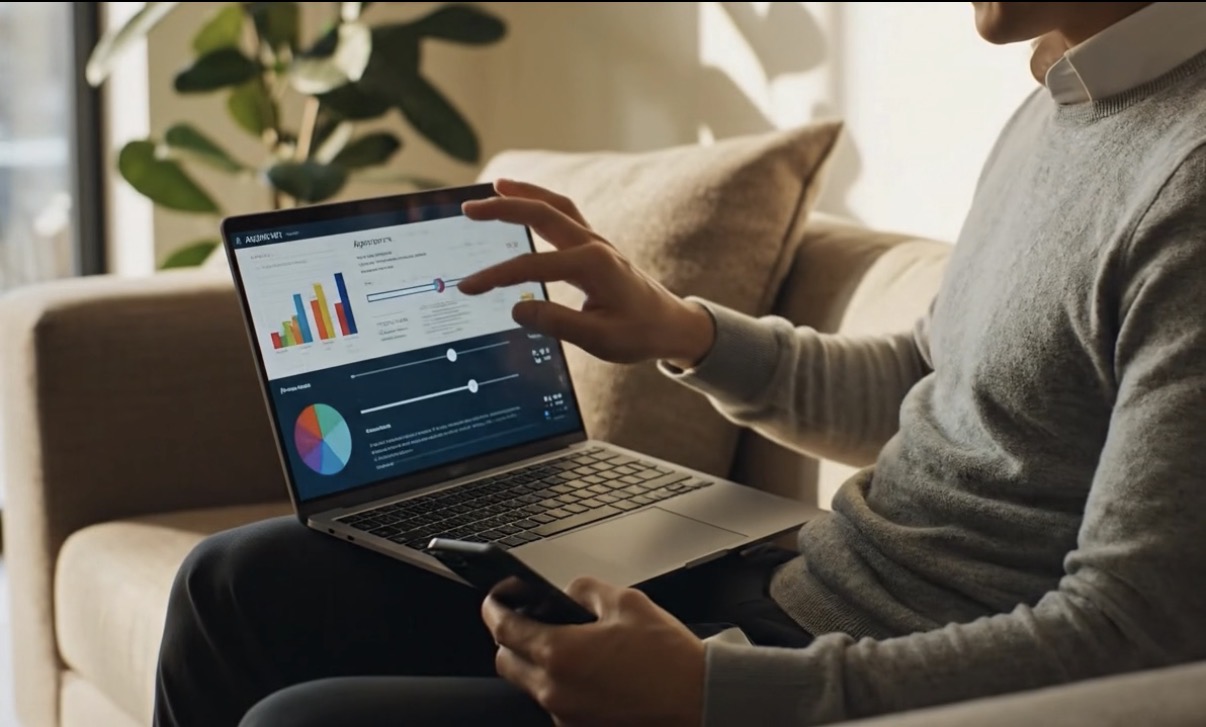
Review analytics dashboard showing customer ratings and revenue trends
Here's how high-performing local businesses think about reviews differently:
They treat reviews as a measurable revenue channel, not a reputation metric.
Every review generated has a calculable impact on:
Local search visibility (traffic)
Conversion rate (closing percentage)
Average transaction value (pricing power)
Customer lifetime value (repeat business and referrals)
When you understand these connections, you stop asking "How do I get more reviews?" and start asking "How do I build a review generation system that produces predictable revenue growth?"
The 5-Part Review-to-Revenue System
Here's the framework that converts reviews into measurable revenue:
Part 1: The Automated Review Request Engine
Manual review requests don't scale. You forget. Your team forgets. Customer timing is inconsistent. Revenue suffers.
The solution is automated review request triggers based on customer journey stages.
Map your customer journey and identify the moments of peak satisfaction:
Service businesses: Immediately after successful job completion
Restaurants: 24 hours after dining (before memory fades)
Retail: 3-5 days after purchase (after they've used the product)
Professional services: After delivering key milestone or final result
Step 2: Build Multi-Channel Request Sequences
Don't rely on a single email. Build sequences across multiple channels:
Day 0 (Trigger Point): SMS request with direct review link
Response rate: 15-25%
"Hi [Name], thanks for choosing [Business]! Would you mind sharing your experience? [Link] - Takes 60 seconds"
Day 3 (If no response): Email follow-up with social proof
Response rate: 8-12%
Subject: "Your feedback helps [Business] serve customers like you"
Include: Examples of recent reviews, explain impact
Day 7 (If no response): Phone call from team member (for high-value customers)
Response rate: 30-40%
Personal touch for customers with $1000+ lifetime value
Step 3: Implement the Two-Stage Feedback Router
This is the critical component that prevents negative reviews while maximizing positive ones:
Create an internal feedback collection page that customers hit first before being directed to public platforms. Ask them to rate their experience 1-5 stars.
If 4-5 stars: Automatically route to Google, Facebook, or industry-specific review platformsIf 1-3 stars: Route to private feedback form where you can address issues before they go public
This approach typically increases positive public reviews by 60-70% while reducing negative reviews by similar margins.
If your review request process requires more than 3 clicks or typing on a tiny keyboard, completion rate drops by 60%+.
Best practices:
Use SMS with direct Google/Facebook review links
Pre-fill customer information when possible
Single-click star rating options
Voice-to-text enabled for written feedback
Load time under 2 seconds
Part 2: Strategic Review Positioning for Revenue Conversion
Not all reviews create equal revenue impact. Strategic businesses engineer the type of reviews they receive to address specific buyer objections and increase conversion rates. Using AI-powered review responses ensures every reply builds trust and improves conversion.
The Review Prompt Strategy
Instead of generic "Please leave us a review," guide customers toward addressing revenue-blocking objections.
For service businesses competing on reliability:
"If you appreciated our on-time arrival and clear communication, we'd love if you mentioned that in a Google review. It helps other customers know what to expect."
For businesses competing on expertise:
"If our team's knowledge helped solve your problem, a quick review mentioning your experience would really help other homeowners facing similar issues."
For businesses competing on value:
"If you felt the quality matched or exceeded the investment, sharing that perspective in a review helps others understand our pricing."
Notice the difference? You're not telling them what to say, but you're prompting them to address the specific objections your prospects have.
The Review Response Revenue Multiplier
Here's what most business owners miss: your review responses convert future customers more than the reviews themselves.
When prospects read reviews, they're looking at how you handle problems, not just positive feedback. A well-crafted response to a 3-star review can generate more trust than ten 5-star reviews.
Response framework for revenue conversion:
Acknowledge the specific issue mentioned
Take responsibility (even for things outside your control)
Explain your corrective action (shows you improve)
Invite offline resolution with direct contact
Demonstrate values that align with prospect concerns
This shows prospects: "This business solves problems and cares about customer experience"—which directly impacts conversion rate.
Part 3: Local SEO Optimization Through Review Velocity
Google's local ranking algorithm weighs review quantity, recency, and rating. But here's what most SEO guides don't tell you: review velocity matters more than total count.
If your top competitor averages 12 reviews per month, you need to generate 14-15 consistently.
How to achieve this without scaling customer volume:
Increase request frequency from existing customers (automated follow-ups)
Segment past customers and re-engage for reviews (one-time campaign)
Implement review requests at multiple service touchpoints (not just final delivery)
Incentivize team members to facilitate review requests (not for positive reviews, but for asking)
The Geographic Keyword Strategy
Every review that mentions your city, neighborhood, or service area strengthens local SEO.
Prompt customers naturally:"If you're comfortable sharing, mentioning your neighborhood in your review helps other [area] residents find us."
Result: Reviews that say "Best plumber in Downtown Austin" or "Finally found a reliable HVAC company in North Phoenix" directly improve local search rankings for those terms.
Part 4: Review-Driven Pricing Power
Here's counterintuitive revenue growth: strong review profiles allow you to charge 10-20% more than competitors while maintaining or increasing conversion rate.
Why? Because reviews shift the buying decision from price comparison to value assessment.
The Social Proof Premium Strategy
When you have 200+ reviews with an average 4.7+ rating, prospects aren't price shopping—they're buying confidence.
This allows you to:
Quote higher prices without justification (the reviews justify it)
Close deals faster (less negotiation, less price objection)
Attract higher-value customers (people paying for quality, not discount hunters)
The Review Portfolio Approach
Strategically position different review types to support premium pricing:
Expertise reviews: "They diagnosed the problem in 10 minutes that three other companies couldn't figure out"Value reviews: "Not the cheapest quote, but absolutely worth it for the quality and professionalism"Reliability reviews: "Showed up exactly when promised, finished on time, no surprise charges"
These reviews pre-frame your pricing as fair and justified before prospects even contact you.
Part 5: Revenue Attribution and Performance Tracking
If you can't measure it, you can't improve it. Most businesses never connect review performance to actual revenue.
1. Review-Influenced RevenueTag new customers in your CRM based on source:
Found via local search (review-influenced)
Called after reading reviews (directly review-influenced)
Referred by existing customer (indirectly review-influenced)
Calculate monthly revenue from review-influenced channels. Most businesses discover 40-60% of revenue traces back to review presence.
2. Conversion Rate by Review Count
Track how conversion rates change as review count increases:
0-25 reviews: Baseline conversion rate
26-50 reviews: Typically 15-25% conversion lift
51-100 reviews: 30-45% conversion lift
100+ reviews: 50-70% conversion lift
This shows the exact revenue ROI of review generation efforts.
3. Average Transaction Value by Review Rating
Customers who mention reading reviews before buying typically spend more. Track:
Average transaction: Customers who didn't mention reviews
Average transaction: Customers who specifically mentioned reviews
Difference typically ranges from 15-30% higher transaction value.
4. Review Generation Efficiency
Review requests sent
Review completion rate
Cost per review acquired
Revenue per review generated
This helps you optimize your automated review request system for maximum ROI
Advanced Strategy: The Review Funnel Integration
Elite local businesses don't treat reviews as isolated they integrate them into every stage of the customer acquisition funnel.
Awareness Stage:
Reviews appear in local search results (Google Business Profile)
Review widgets on homepage and landing pages
Social proof in paid ad copy
Consideration Stage:
Review highlights on service pages
Video testimonials from top reviewers
Case studies expanded from positive reviews
Decision Stage:
Review-based FAQ sections addressing objections
"See what [Service] customers are saying" CTA
Sales team references specific reviews during consultations
Retention Stage:
New customer onboarding mentions review-based improvements
Service delivery includes "review moments" (photo-worthy results, surprise value)
Post-service communication reinforces review request timing
This creates a self-reinforcing cycle: reviews drive revenue, revenue creates more customers, more customers generate more reviews.
Common Mistakes That Kill Review-Based Revenue Growth
Avoid these critical errors:
Mistake 1: Waiting Too Long to Request Reviews
Optimal window for review requests: 24-72 hours after service completion. Beyond that, response rates drop 50-70%. Memory fades, urgency disappears, and you've lost the momentum.
Mistake 2: Generic Review Requests
"Please leave us a review" generates 3-5% response rates. Personalized requests that reference specific service details generate 15-25% response rates.
Bad: "Thanks for your business! Leave us a review."Good: "Thanks for trusting us with your kitchen remodel, Sarah! If you're happy with how the backsplash turned out, we'd love a quick Google review."
Mistake 3: Ignoring Review Responses
Every review you don't respond to is a lost conversion opportunity. Prospects read responses as much as reviews. No responses = no trust building.
Mistake 4: Focusing Only on Star Rating
A 4.7-star rating with 150 detailed reviews outperforms a 4.9-star rating with 20 generic reviews. Volume and detail matter more than perfect scores.
Mistake 5: No Follow-Up on Failed Requests
If someone doesn't respond to your first review request, they're not saying no—they're saying "not now" or "I didn't see it." Multi-touch sequences with 3-5 touchpoints generate 3x more reviews than single requests.
Mistake 6: Treating All Customers Equally
Your $5,000 customers deserve different review request treatment than your $200 customers. High-value customers should get personal phone calls, handwritten notes, or executive-level outreach.
The Review Automation Advantage
Here's the reality that separates growing businesses from stagnant ones: manual review management doesn't scale, doesn't produce consistent results, and doesn't generate measurable revenue impact.
You can't manually:
Monitor review requests across 50-500 customers monthly
Send perfectly timed follow-ups based on service completion
Route happy vs. unhappy customers to different feedback channels
Track which reviews influenced which revenue
Respond to every review within 24 hours across multiple platforms
Optimize request timing based on response rate data
The businesses generating 3-5x more reviews than competitors use reputation management platforms that automate the entire system.
What automation solves:
Consistency: Reviews requested at optimal timing for every customer, every timeScale: Handle 10 customers or 1,000 with the same efficiencyIntelligence: A/B test request messaging, timing, and channels automatically
Integration: Connect review data to CRM for revenue attribution
Speed: Instant review monitoring and response triggers across all platforms
An automated review request system doesn't just save time it fundamentally changes the economics of review generation. Manual cost per review: $15-30 in labor. Automated cost per review: $2-5.
That's not efficiency. That's a completely different business model.
Measuring Success: The Revenue Metrics That Matter
Track these monthly to prove ROI:
Leading Indicators (What Drives Results):
Review request send rate
Review completion rate (%)
Average days between service and review request
Multi-channel request utilization rate
Review response rate (you responding to customers)
Lagging Indicators (The Actual Results):
Total reviews generated
Net new reviews (new reviews minus removed/filtered reviews)
Average rating trend
Review velocity (reviews per 30 days)
Review-influenced revenue
Conversion rate by review count segment
Cost per review acquired
Revenue per review generated
Target Benchmarks:
Review completion rate: 15-25%
Review response rate: 100% within 24 hours
Review velocity: 2-3% of monthly customers
Review-influenced revenue: 40-60% of total revenue
Conversion rate lift: 30-50% vs. pre-review-system baseline
The Review-to-Revenue System
Turning reviews into revenue requires a structured system:
Automate review requests at peak satisfaction moments using multi-channel follow-ups (SMS, email, phone)
Route feedback intelligently: 4–5 star customers to public platforms, 1–3 star customers to private resolution
Optimize reviews for conversion by prompting feedback that addresses buyer objections and responding strategically
Leverage reviews for local SEO by maintaining consistent review velocity and encouraging geographic keyword mentions
Enable premium pricing by using review strength to justify higher positioning in your market
Track revenue attribution by measuring review-influenced conversions and ROI per review
Turn Reviews Into Your Highest-ROI Revenue Channel
Most local businesses treat reviews as something that "just happens." Elite businesses engineer them as a systematic revenue driver.
The difference isn't luck or better service it's having a reputation management platform that automates review generation, optimizes for conversion, and tracks revenue impact.
Review Crusher AI helps local businesses build exactly this system.
Our platform automates review requests at optimal timing, routes unhappy customers to private feedback channels before they damage your reputation, centralizes review monitoring across all platforms, and provides the analytics that prove ROI.
Stop leaving revenue on the table. Start building a review system that works while you sleep.
Ready to turn reviews into predictable revenue growth?
Get started for free and see how automated reputation management converts customer feedback into your competitive advantage. Our clients generate 3-5x more reviews than competitors while increasing conversion rates by 30-50%—because they've systematized what everyone else is doing manually.
Your reviews are your revenue engine. Build it like one.
FAQ
How many reviews do I need to see revenue impact?
Revenue impact begins immediately, but meaningful conversion rate lift typically occurs at 25-50 reviews. Maximum impact happens at 100+ reviews with consistent velocity (new reviews every week).
What's the ROI of investing in review automation?
Average local business sees 3-5x ROI within 90 days. If you generate 10 additional reviews monthly and each review influences 2 customers at $500 average transaction value, that's $10,000 monthly revenue from a $200-500/month automation investment.
How do I get reviews from past customers who never left one?
Launch a one-time re-engagement campaign to your customer database from the past 12-24 months. Personalize the request, explain how reviews help your business, and make it easy with direct links. Expect 8-15% response rate.
Can I incentivize reviews?
You can incentivize review requests (reward employees for asking), but you cannot incentivize positive reviews or payment for reviews. This violates Google's policies and can result in review removal.
What if I get a negative review despite the feedback routing system?
Respond within 24 hours using the 5-part framework: acknowledge, take responsibility, explain briefly, describe corrective action, offer private resolution. Then follow up offline to resolve and request an update. 30-40% of negative reviews get updated or removed after proper resolution.
Protect Your Reputation
Stop juggling reviews across different platforms. Centralize everything with ReviewCrusher’s review management software and start getting more reviews in less time.